Bad Trigger Signal? Don't Tune Around It
If the ECU cannot read engine position correctly, fuel and ignition changes will never make the car truly reliable.
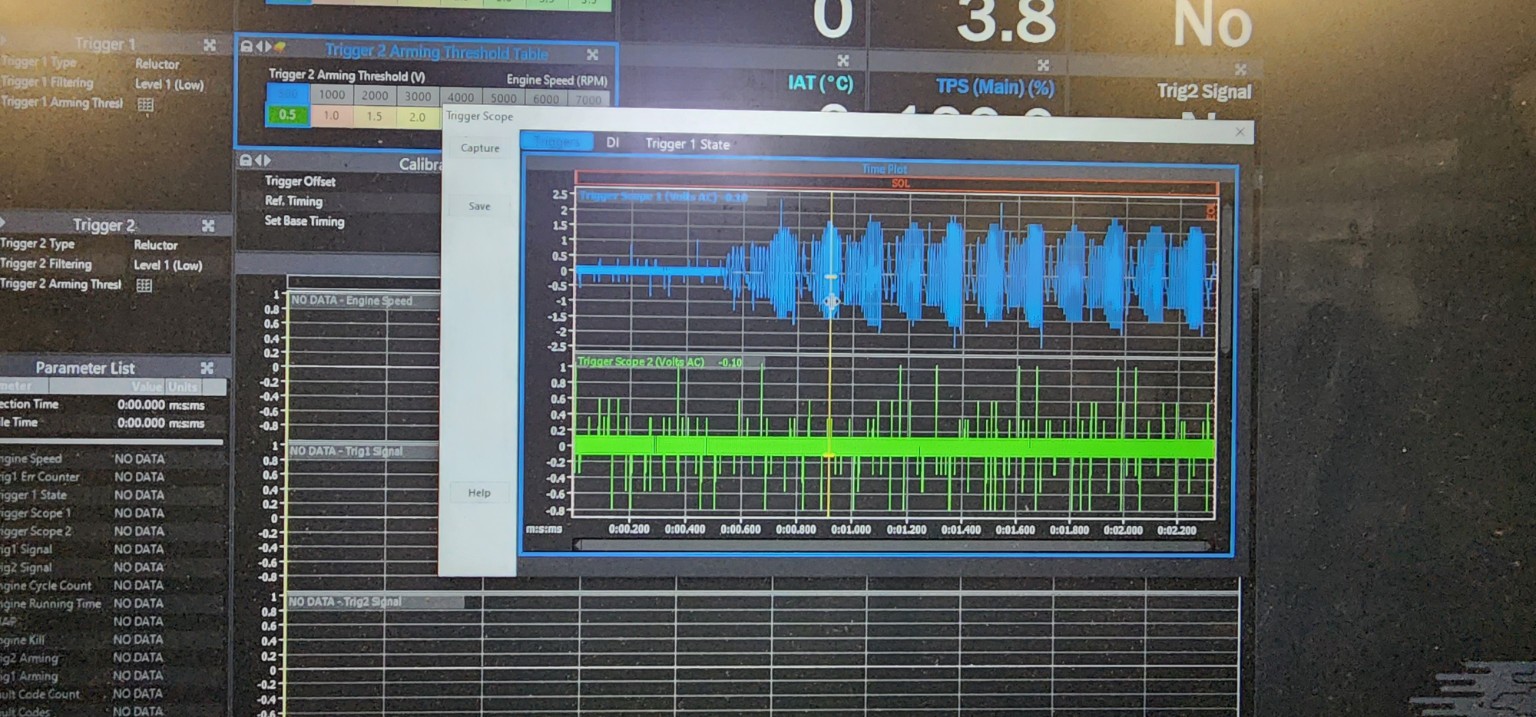
The ECU needs a clean clock
Crank and cam sensors tell the ECU engine speed and position. When that signal drops out or arrives at the wrong time, you can get sync loss, hard starting, misfires or an engine that will not rev cleanly.
Look at the signal while the fault happens
A multimeter can show voltage, but it cannot show the waveform. We use a scope while cranking and through the problem rpm range to check amplitude, tooth count, clean edges and crank-to-cam timing.
Fix the cause first
Filtering should not hide a bad sensor gap, damaged trigger wheel, weak ground or badly routed cable. Fix the hardware and wiring, then match the ECU settings to a signal you know is good.
Need help with a tune or a problem that won't go away? Send Chen the details.
Email Chen